CONTACT
  • Login
Upgrade
TOKYOwebzine
Advertisement
  • Home
    • Our Authors
    • Media Kit
    • Contact
    • Cookie Policy
    • Terms and Conditions
  • News
  • Business
  • Lifestyle
    • Beauty
    • Kids
    • Sustainable living
    • Well-being
    • Sports
    • Creativity
  • Culture
  • Gastronomy
  • Travel
  • Global Tokyo
  • Insights
  • Local Guide
    • Activities in Tokyo
    • Hotels in Tokyo
    • Nightlife in Tokyo
    • Restaurants in Tokyo
    • Services in Tokyo
    • Shopping in Tokyo
  • Home
    • Our Authors
    • Media Kit
    • Contact
    • Cookie Policy
    • Terms and Conditions
  • News
  • Business
  • Lifestyle
    • Beauty
    • Kids
    • Sustainable living
    • Well-being
    • Sports
    • Creativity
  • Culture
  • Gastronomy
  • Travel
  • Global Tokyo
  • Insights
  • Local Guide
    • Activities in Tokyo
    • Hotels in Tokyo
    • Nightlife in Tokyo
    • Restaurants in Tokyo
    • Services in Tokyo
    • Shopping in Tokyo
No Result
View All Result
TOKYOwebzine
No Result
View All Result
Home Luxury Lifestyle Gastronomy

Sanma season in Tokyo: where to eat it fresh

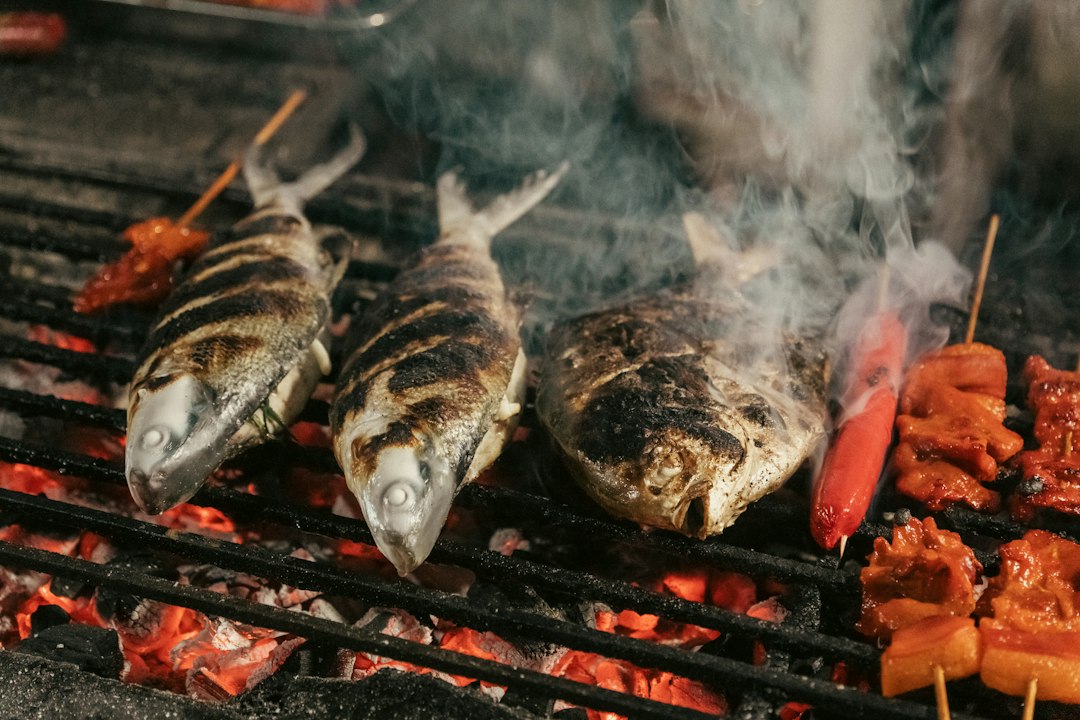
Chef grilling fish during Tokyo's sanma season at an autumn festival

#image_title

Sanma disappears from Tokyo menus for most of the year, then takes over supermarket counters, festival grills and sushi bars within a matter of weeks. The fish spends spring and summer far offshore before turning south in autumn, and that migration is when the biggest hauls land in Japan. Prices and volumes now swing hard from one season to the next, so where you eat it, and how early you show up, decides whether you get a fat September fish or a thin, expensive disappointment.
This list sticks to places where the gap between catch and plate is short, not restaurants that simply print sanma on a seasonal menu. Each one asks something different of you, an early alarm, a long queue, or just a willingness to cook it yourself, so match the entry to how much hassle you want this autumn.

### Sushi Dai, Toyosu Market

Even back at the old Tsukiji Market, long lines for the famous Sushi Dai were a familiar sight, and the restaurant remains just as popular after moving to Toyosu, officially open from 6 AM to 2 PM. On weekdays it usually wraps up around 11 AM, and on Saturdays or holidays it can sell out as early as 9 AM. One set served to visitors recently included otoro, anago, uni, tai and sanma together, so the saury appears as part of a broader seasonal selection rather than a dedicated sanma shop. Arrive before the market opens if you want a seat without a multi-hour wait.

### Daiwa Sushi and Yamazaki, inside Toyosu Market

https://noornoor.biz https://noornoor.biz https://noornoor.biz

If the Sushi Dai queue looks impossible, two other counters inside the same market building are worth the walk. Daiwa Sushi is a very well-known sushiya-style shop with counter seating only, and its sushi prepared with premium tuna is genuinely impressive. Yamazaki, meanwhile, moved to Toyosu after more than forty years at its original Tsukiji location, which means decades of relationships with the same fish dealers. Both serve seasonal nigiri sets that rotate with the catch, so ask what came in that morning before ordering.

### Meguro Sanma Festival

Every year Tokyo has its Sanma festival, with the 2025 edition held on October 12th from 10:00am to 2:30pm, and on this day you get a grilled fish completely free of charge. Around 7,000 sanma fished in Iwate prefecture's Port of Miyako are served for free, charcoal grilled and served simply with salt, grated daikon radish and sudachi. The festival began in 1996, and every year tens of thousands of people gather to eat sanma in Meguro. Arrive a few hours early to line up, because the queue for free sanma gets long fast.

### Meguro Kumin Matsuri sanma stall

Fewer visitors know that Meguro ward runs a second free sanma giveaway the same season, folded into its wider community festival. About 5,000 sanma from Miyagi prefecture's city of Kesennuma are grilled and served for free at this event, sourced from a different port than the main October festival. It draws a smaller, more local crowd than the headline Sanma Matsuri, which makes it a reasonable backup if you miss the bigger date or cannot face the main queue.
-

A woman cooking an izakaya menu in Tokyo while navigating a gluten-free izakaya dinner

Gluten-free izakaya: Tokyo guide

30/08/2026
A shopper carefully selecting fresh sashimi trays at a Tokyo depachika basement food hall

Depachika gluten-free meals in Tokyo

01/08/2026
People in a Tokyo soba restaurant, dipping the chilled buckwheat noodles into a ceramic cup of dashi sauce.

Cold soba and chilled tofu in Tokyo

31/07/2026
japanese women searching for gluten free food labels

Japanese food labels: hidden gluten guide

24/07/2026
A hotel bartender presents a curated Japanese whisky flight on a dark wood counter in Tokyo

Japanese whisky flights in Tokyo hotel bars

17/07/2026
A baker slices a thick loaf of milk bread in a Tokyo bakery, showing its soft and pillowy crumb

Milk bread Tokyo: 6 bakeries worth the detour

11/07/2026

### A neighborhood izakaya shioyaki set near Meguro Station

For a sit-down version without a festival ticket, a handful of small, family-run izakaya near Meguro Station keep salt-grilled saury on the lunch menu through autumn. One cozy spot offers a fantastic salt-grilled saury lunch set, paired with sides like cabbage and macaroni salad, miso soup, rice and pickles at reasonable prices. These places rarely take reservations for solo diners, but expect a short wait at peak lunch hours since seating is limited.

### Ginza sushi counters, for the first catch of the year

If budget is not the constraint, chasing the very first sanma of the season is its own small ritual among serious sushi fans. Midway through July, sparse early hauls were selling for an eye-popping ¥100,000 per kilo, or ¥12,500 per fish, at Tokyo's Toyosu Fish Market, and most of those fish were bought up by high-end sushi eateries in Taiwan, while some went to sushi restaurants in Ginza and other parts of Tokyo. By September the price drops sharply as volume increases, but a handful of Ginza counters still mark the arrival of the season's first sanma as an event worth a premium seat.

### Buying fresh and grilling it at home

The cheapest and often most reliable route is the one most Tokyo households already use. By early September fresh saury had begun appearing in supermarkets around ¥350 per fish, and in a more typical recent year they were selling for approximately ¥299 each in supermarkets in Tokyo. Look for plump bodies, glossy shiny skin, firm texture, bright clear eyes and full bellies as the signs of top quality before you buy, then grill it simply with salt and serve it with grated daikon.

How to choose between them

Pick by schedule and tolerance for queues rather than by ambition alone. Early risers chasing the freshest, most market-direct fish should head to Toyosu before 9am on a weekday, since weekend stock at Sushi Dai, Daiwa Sushi or Yamazaki can vanish within hours of opening. If you want the experience without spending anything, build a trip around the Meguro Sanma Festival in October and arrive early to beat the line, with the Kumin Matsuri stall as backup. For a relaxed, no-fuss dinner, a neighborhood izakaya shioyaki set near Meguro Station costs little and needs no planning, while a Ginza counter in July or early August suits anyone who wants to say they tried the very first catch of the year at any price. Cooking at home remains the cheapest and most forgiving option, provided you check the fish's eyes and skin before you buy.

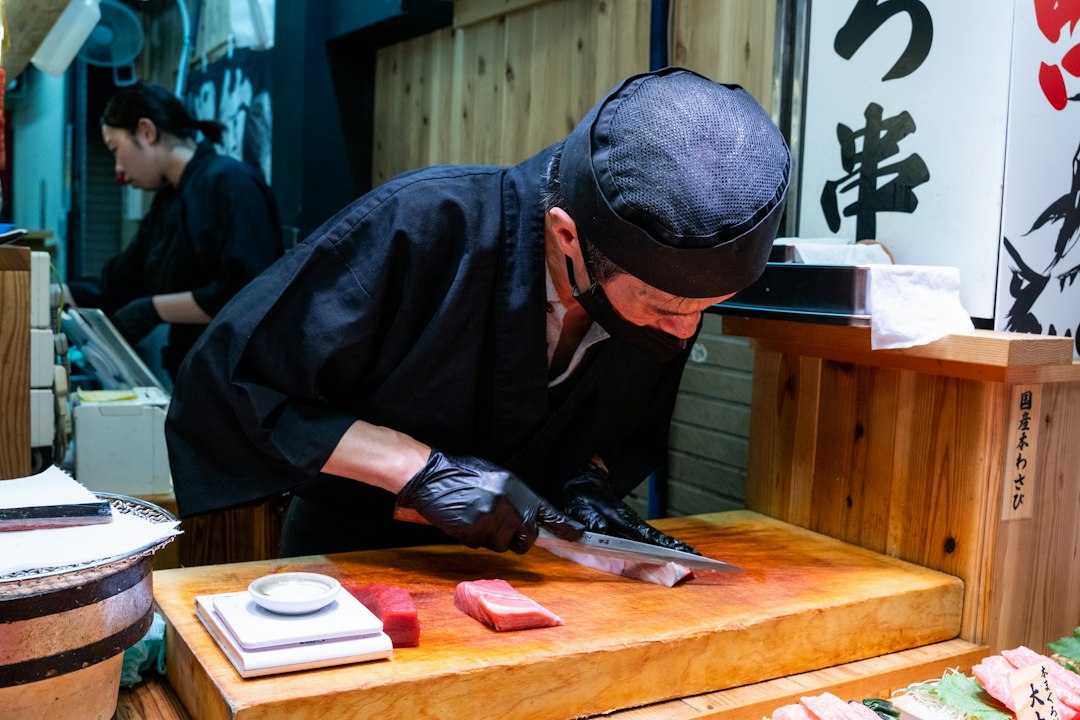
Sushi chef preparing saury nigiri during sanma season at Toyosu Market

Learn more about sanma season

  • Autumn Cravings: Premium Pacific Saury Remain Elusive this Year
  • Meguro Sanma Festival 2025
  • Toyosu Fish Market Dining Guide
Previous Post

Day trips from Tokyo: trains under 90 minutes

Related Posts

A woman cooking an izakaya menu in Tokyo while navigating a gluten-free izakaya dinner
Gastronomy

Gluten-free izakaya: Tokyo guide

30/08/2026
A shopper carefully selecting fresh sashimi trays at a Tokyo depachika basement food hall
Gastronomy

Depachika gluten-free meals in Tokyo

01/08/2026
People in a Tokyo soba restaurant, dipping the chilled buckwheat noodles into a ceramic cup of dashi sauce.
Gastronomy

Cold soba and chilled tofu in Tokyo

31/07/2026
japanese women searching for gluten free food labels
Gastronomy

Japanese food labels: hidden gluten guide

24/07/2026
A hotel bartender presents a curated Japanese whisky flight on a dark wood counter in Tokyo
Gastronomy

Japanese whisky flights in Tokyo hotel bars

17/07/2026

Leave a Reply Cancel reply

Your email address will not be published. Required fields are marked *

No Result
View All Result

Our Focus

TOKYOwebzine is your international window on Tokyo: lifestyle, business, culture, sports and events for a global audience drawn to the city's unique blend of tradition and innovation.

Our Readers

TOKYOwebzine addresses readers who engage with Tokyo at a high level: professionally, financially, strategically, and as decision-makers in their fields.

Our Approach

Lifestyle, design, and culture are integrated as context and indicators of economic precision, creative depth, and Japan's enduring global influence, not standalone entertainment.

Recent Post

  • Sanma season in Tokyo: where to eat it fresh
  • Day trips from Tokyo: trains under 90 minutes

© 2026 TOKYOwebzine by NOOR & NOOR — part of WEBZINE.world.

Welcome Back!

Login to your account below

Forgotten Password?

Retrieve your password

Please enter your username or email address to reset your password.

Log In
Manage Consent
To provide the best experiences, we use technologies like cookies to store and/or access device information. Consenting to these technologies will allow us to process data such as browsing behavior or unique IDs on this site. Not consenting or withdrawing consent, may adversely affect certain features and functions.
Functional Always active
The technical storage or access is strictly necessary for the legitimate purpose of enabling the use of a specific service explicitly requested by the subscriber or user, or for the sole purpose of carrying out the transmission of a communication over an electronic communications network.
Preferences
The technical storage or access is necessary for the legitimate purpose of storing preferences that are not requested by the subscriber or user.
Statistics
The technical storage or access that is used exclusively for statistical purposes. The technical storage or access that is used exclusively for anonymous statistical purposes. Without a subpoena, voluntary compliance on the part of your Internet Service Provider, or additional records from a third party, information stored or retrieved for this purpose alone cannot usually be used to identify you.
Marketing
The technical storage or access is required to create user profiles to send advertising, or to track the user on a website or across several websites for similar marketing purposes.
  • Manage options
  • Manage services
  • Manage {vendor_count} vendors
  • Read more about these purposes
View preferences
  • {title}
  • {title}
  • {title}
No Result
View All Result
  • Home
    • Our Authors
    • Media Kit
    • Contact
    • Cookie Policy
    • Terms and Conditions
  • News
  • Business
  • Lifestyle
    • Beauty
    • Kids
    • Sustainable living
    • Well-being
    • Sports
    • Creativity
  • Culture
  • Gastronomy
  • Travel
  • Global Tokyo
  • Insights
  • Local Guide
    • Activities in Tokyo
    • Hotels in Tokyo
    • Nightlife in Tokyo
    • Restaurants in Tokyo
    • Services in Tokyo
    • Shopping in Tokyo

© 2026 TOKYOwebzine by NOOR & NOOR — part of WEBZINE.world.

Are you sure want to unlock this post?
Unlock left : 0
Are you sure want to cancel subscription?
Verified by MonsterInsights
enEnglishja日本語