Walk into a Tokyo climbing gym for the first time and the front desk staff will hand you a form before you touch a hold. That form, not the climbing itself, trips up most beginners. Registration fees, rental shoes and a Japanese grading system that counts backwards all follow a fixed sequence once you know it. This guide walks through that sequence using real Tokyo gyms, so your first visit costs what it should and takes less time than finding the entrance.
Start with a day pass, not a membership
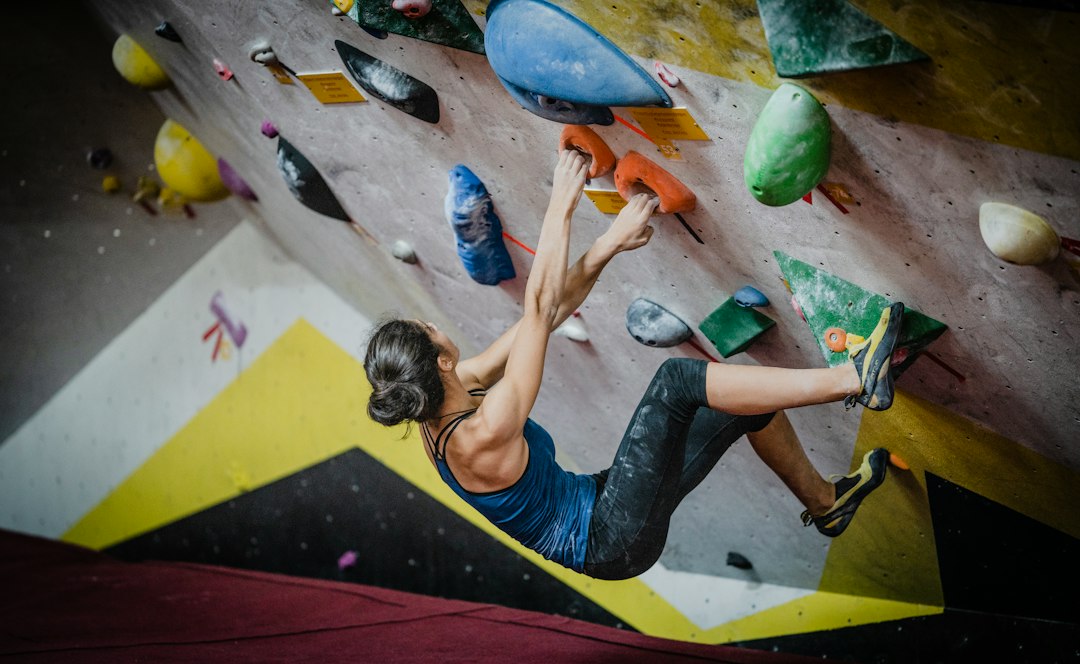
Most Tokyo bouldering gyms work the same way for a newcomer. You pay a one-time registration fee, then a day pass each time you return. At Climbing Gym Hütte, five minutes from Mikawashima Station, day passes are ¥1,800, plus a one-time registration fee of ¥1,000 for first-time visitors. The gym itself offers bouldering 5 minutes from Mikawashima Station with technical variety: strong 130°+ overhangs and multiple slab walls, so the price buys real variety, not just a few beginner walls.
Cheaper options exist in the suburbs. Chabouzu Bouldering Gym, three minutes from Hibarigaoka Station, charges so little that day passes are ¥990 with a one-time registration fee of ¥990, so your first visit runs ¥1,980 total. The trade-off shows up in the walls: low-height walls designed for new climbers, women, and families with kids as young as three, backed by professional instruction. Pick Hütte for a harder session, Chabouzu for a gentle one.
Choose a climbing gym by station, not by hype
Tokyo's best-known gyms cluster around central stations, and the walk matters more than the reviews. NOBOROCK Shibuya sits where NOBOROCK Shibuya Bouldering GYM delivers focused bouldering 5 minutes from Shibuya Station, with over 130 problems from 6-kyu to 3-dan across varied angles (80°-150°) with dedicated beginner/advanced zones, all for a ¥1,600 day pass.
Across town, B-PUMP Tokyo Akihabara claims the scale record in the country. It describes itself as a mega bouldering gym with the largest scale (about 1980㎡) in Japan, delivering 100 bouldering problems (V0-V9) just 3 minutes from Suehirocho Station. Both gyms list English support, so language rarely decides the choice. Distance from your hotel or apartment usually should.
Pack light, rent the rest
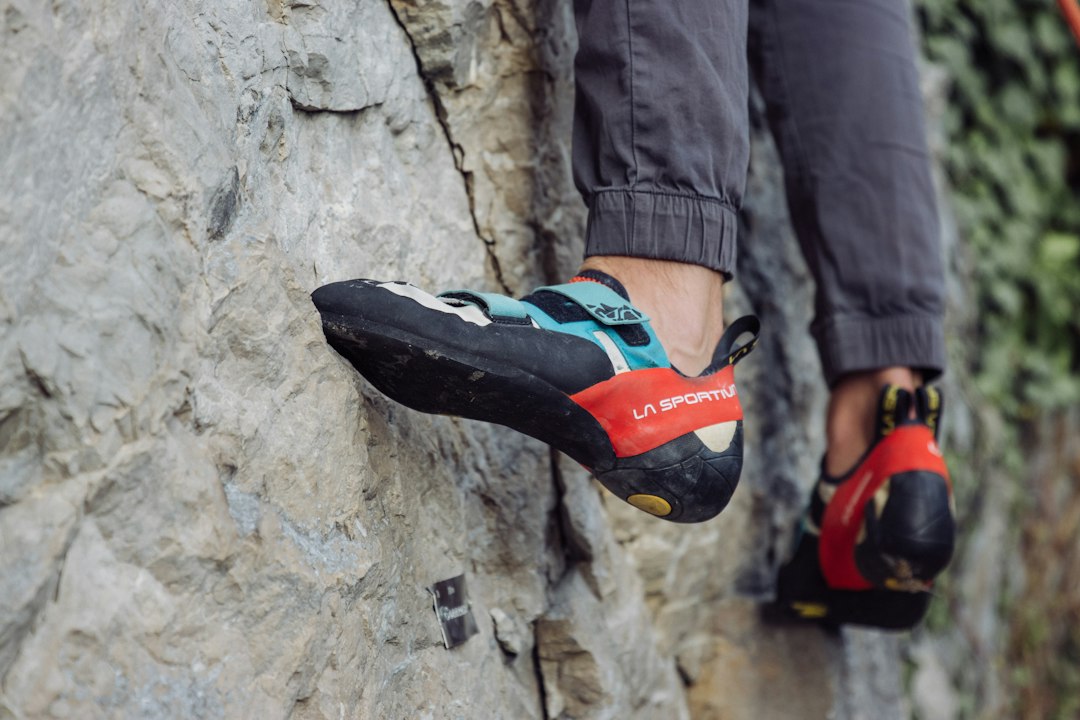
You do not need to own shoes or a chalk bag before your first session. Across the city, almost all gyms offer rentals, though socks are required. B-PUMP Tokyo goes further on a first visit, where shoe hire is free on the first visit, and chalk is not rented out at the moment, priced at ¥330 tax included if you buy it instead.
Chalk itself comes with a rule many visitors miss. Many gyms enforce strict liquid chalk only policies to maintain air quality, and loose powder chalk may result in denied entry. Buy a small bottle at a gym shop before your session rather than after. B-PUMP TOKYO Akihabara keeps one on-site, since it has a gear shop on-site if you need to grab shoes, chalk, or other equipment.
The kyu-dan grading system will frustrate you at first
If you have climbed abroad, Tokyo's grading will feel backwards. Japan rates boulder problems with the Dan-Kyu system, where the scale descends with difficulty in the kyu ranking, 8 kyu being easiest and 1 kyu being hardest, then the first Dan, called Sho-Dan, marks the transition to master status.
This is a real obstacle, not a minor quirk. The countdown direction throws people off the first time: a climber at a smaller kyu number is meaningfully stronger than one at a larger number, and kyu grading is also the most gym-local of the common systems, since two gyms in the same city can disagree by a full grade or two. B-PUMP Ogikubo runs its own version, where the wall starts at 8Q, roughly V0-V1, for beginners and progresses through numbered Kyu grades, eventually reaching Dan levels at the top. Expect the same number to feel different at every gym, and treat your first few sessions as calibration rather than failure.
Learn the unwritten etiquette before someone points it out
Front desk staff at most gyms spend the first few minutes on orientation, not payment. At B-PUMP Ogikubo, staff member on duty will teach you the rules and guide you through a simple course for your climbing trial experience, and reservations are not needed for your trial experience, you just head to the gym during open hours.
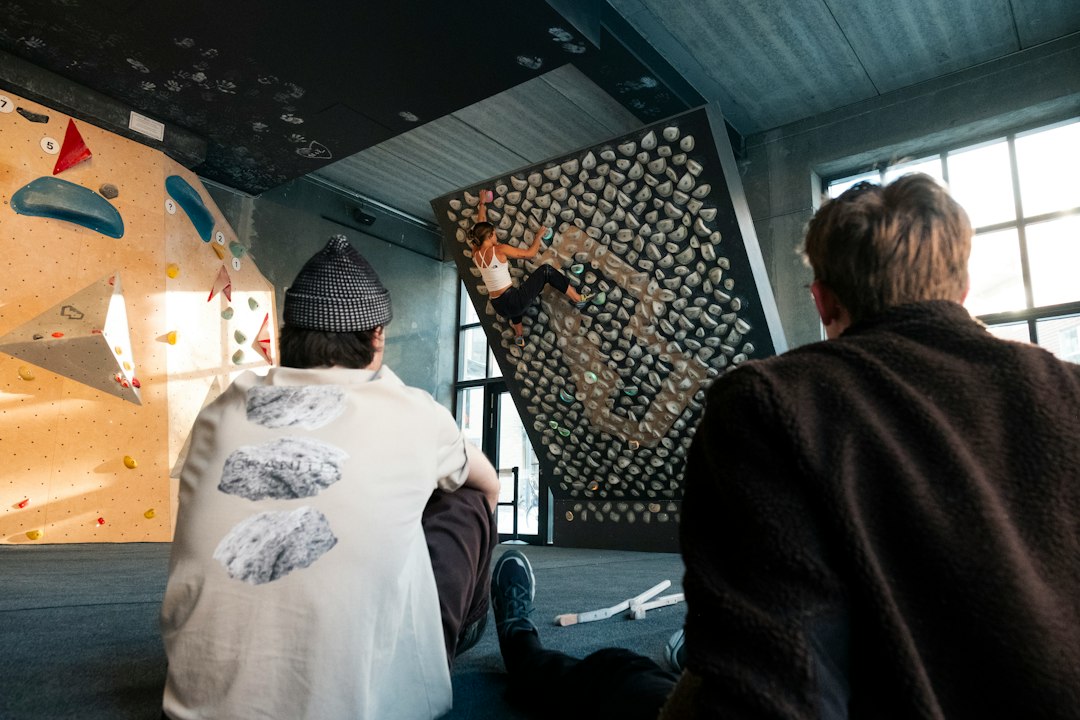
Once you are climbing, the house rules concern the holds more than you. Brushing chalk and skin off holds restores friction, so brushing your own tick marks keeps climbs good for everyone. Wait your turn on popular problems, watch one attempt before trying the same line, and keep bags off the mats. Nobody explains this twice.
Once the first visit is done, the system stops being a puzzle. You will know which gym fits your budget, which station gets you there fastest, and which grade actually matches your level across different walls. Many regulars eventually convert the day pass habit into a monthly card: B-PUMP Tokyo offers an adult monthly card, payment for this gym only, that continues until cancelled, priced around ¥14,960 a month, cheaper than ten separate day passes. The hardest part of Tokyo bouldering was never the climbing. It was the first ten minutes at the front desk, and now you know exactly what happens there.