Konbini culture shapes the rhythm of Tokyo in a way that no other retail format in the world has managed to replicate, and the reason lies not in the stores themselves but in the invisible system that feeds them every single hour of every day.
Why 24 hours became the standard
In 1975, the Toramarumachi 7-Eleven in Koriyama, Fukushima Prefecture, became the first konbini to adopt 24-hour service. That decision set a precedent that spread across the entire industry within a generation. As the number of single-person households and dual-income families grew through the 1980s, konbini stores adapted, trading not only in space but also in time. In a densely populated, prosperous metropolis where time and space are at a premium, they were perfectly positioned for prominence.
Shops offering all-day, all-night access became especially popular, and eventually, continuous service became a standard expectation mandated by franchise agreements. This was not simply a consumer preference. It was a structural commitment that forced logistics operators to redesign their entire supply model around the clock. Experts say the key to konbini success in Japan is their finely tuned supply chains that can monitor stock down to a single toothbrush, allowing them to sell an unparalleled array of goods.
Today, the number of convenience stores in Japan has ranged between 55,500 and 55,900 since 2019. There are almost 7,000 konbini in Tokyo alone, which works out at 1 for every 1,860 residents. That density is not accidental. It is a direct product of the logistics model that makes each store viable.
The supply chain machine behind every shelf
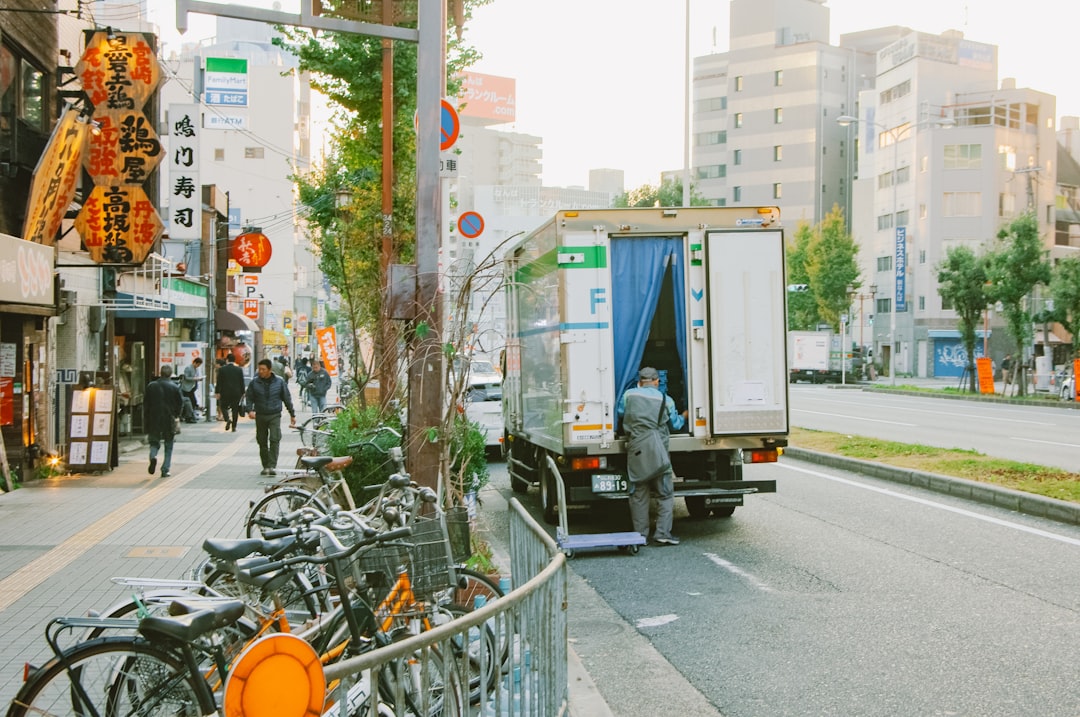
One of the core reasons konbini succeed is the way stores are restocked. Most shops have no backroom storage. Instead, computers track every item sold, allowing logistics centers to dispatch exactly the right number of replacements. A delivery truck might bring something as precise as a single toothbrush or pack of toilet roll.
Items are restocked at 6 AM, 11 AM, and 5 PM daily, and unsold food is pulled from shelves hours before its expiration date, not days. This schedule does not leave room for error. Combined distribution centers are organized by product type and temperature in each area. Deliveries from different suppliers are loaded into single temperature-controlled trucks, ensuring each product stays at the correct temperature from production to store. There are 4 categories of temperature-controlled distribution: frozen foods, chilled foods, ambient temperature products, and warm foods.

Another critical factor is the speed at which the supply chain flows. When a store places an order, it is transmitted immediately to the supplier and the distribution center. Suppliers base their forecasts on actual customer data provided by information systems. This real-time connection between the store floor and the production facility is what makes the 24-hour model economically possible.
How data drives inventory decisions
Complex logistics software tracks factors like demographics, weather, and school holidays to predict what each store will need at any given time. This is not generic forecasting. It is hyper-local computation. The information system collects weather reports 5 times every day so that local stores can plan in advance. Based on the weather forecast, the system can optimize the number of deliveries and the distribution route.
A common feature of 7-Eleven Japan and large global retailers is the introduction of POS (Point of Sale) systems in the early 1980s. Both established competitive advantage by combining information, distribution, and product procurement strategy to implement their own supply chain management systems earlier than competitors. That early investment in data infrastructure is still the foundation of the model today. In Japan’s convenience store market, 7-Eleven Japan has always been a leader, and the systems it developed have often become the industry standard.
Complex logistics software keeps track of demographics, weather, and school holidays to predict what each store will need at a given time. The result is a store that feels effortlessly stocked, even though the process behind it is highly calculated.
The franchise model as a logistics network
Konbini culture has fundamentally redefined what a retail franchise means in Japan. The franchise agreement is not simply a license to sell products under a shared brand. It is an entry point into one of the most sophisticated logistics ecosystems in the world. Each franchisee accepts delivery schedules, ordering systems, and data-sharing protocols that are set by the head office. In return, they receive a supply chain that operates with a precision most standalone retailers could never afford to build alone. The relationship between the head office and the franchisee is closer to a production partnership than a traditional retail arrangement. This model has allowed konbini chains to scale into the tens of thousands of stores while maintaining near-identical freshness and service standards at every location.
Industry perspective, convenience store franchise and retail logistics professionals in Japan
Freshness as a competitive standard
Temperature-controlled distribution networks, strict food safety audits, and daily freshness checks mean a low-cost sandwich can genuinely taste better than a sit-down meal costing triple the price. This is the promise that konbini culture makes to every customer, and the logistics network is what keeps that promise. The typical convenience store receives deliveries of ready-made food 3 times a day. Non-perishables, milk, and bread are delivered once every 24 hours.
Once there were enough stores in place, convenience store head offices gained leverage over wholesalers and increasingly dealt with food producers directly, even producing products together to create chain-exclusive food lines, something supermarkets had never done. This vertical integration gave the major chains direct control over freshness standards at the production level, not only at the store level. Companies began to differentiate store brands more clearly by developing products exclusive to their stores, often in close collaboration with manufacturers.
Japan’s convenience store sector continues to thrive, with over 56,000 stores generating upwards of USD 77 billion annually. That figure is not simply a measure of consumer spending. It reflects the commercial value of a logistics model that has been refined over 5 decades.
Konbini culture as infrastructure
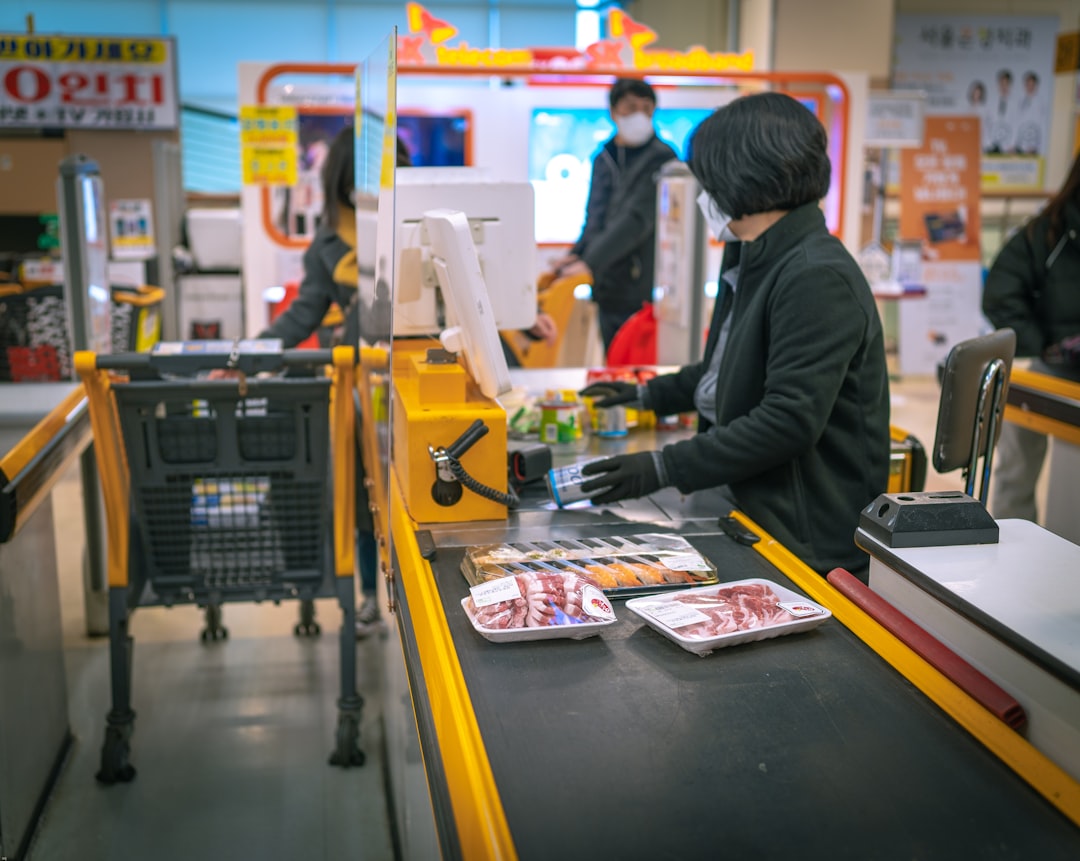
With labor shortages, rising customer expectations, and new technology, konbini are evolving into multifunctional community hubs powered by automation and AI. The supply chain model is adapting alongside this shift. The next frontier is the unstaffed konbini, enabled by self-checkouts and an intricate network of sensors and AI-enhanced cameras that monitor every angle.



While there are concerns about the energy impact of keeping stores open continuously, the difference in consumption between operating all night and closing is not as great as expected. The energy-consuming refrigeration systems must keep running even when the shop is closed, and there is an excess supply of electricity from providers during nocturnal hours. This makes the 24-hour model not only commercially logical but also energetically defensible.

In Japan, convenience store operators have described their stores as social infrastructure, and policy makers have acknowledged this role, working to involve the private sector in the process of strengthening communities. Konbini culture, in this sense, is no longer a retail category. It is a form of urban architecture.
Konbini culture and the logic that never sleeps
Konbini culture endures because it is built on a foundation of operational precision, not convenience alone. The 24-hour model is the visible result of a supply chain that synchronizes production, logistics, data, and franchise management into a single continuous system. Tokyo’s corner stores stay open because closing them would mean stopping a machine that was designed never to stop. For businesses and city planners around the world, konbini culture offers a clear lesson: when logistics reaches this level of integration, the store itself becomes secondary to the system. The future of urban retail will be shaped by those who understand this principle and build accordingly.
Discover more about konbini culture
- Commerce Statistics – Ministry of Economy, Trade and Industry (METI)
- USDA GAIN Report: Retail Foods Annual, Japan
- Japanese C-Stores Continue to See Growth, NACS, January 2025