CONTACT
  • Login
Upgrade
TOKYOwebzine
Advertisement
  • Home
    • Our Authors
    • Media Kit
    • Contact
    • Cookie Policy
    • Terms and Conditions
  • News
  • Business
  • Lifestyle
    • Beauty
    • Kids
    • Sustainable living
    • Well-being
    • Sports
    • Creativity
  • Culture
  • Gastronomy
  • Travel
  • Global Tokyo
  • Insights
  • Local Guide
    • Activities in Tokyo
    • Hotels in Tokyo
    • Nightlife in Tokyo
    • Restaurants in Tokyo
    • Services in Tokyo
    • Shopping in Tokyo
  • Home
    • Our Authors
    • Media Kit
    • Contact
    • Cookie Policy
    • Terms and Conditions
  • News
  • Business
  • Lifestyle
    • Beauty
    • Kids
    • Sustainable living
    • Well-being
    • Sports
    • Creativity
  • Culture
  • Gastronomy
  • Travel
  • Global Tokyo
  • Insights
  • Local Guide
    • Activities in Tokyo
    • Hotels in Tokyo
    • Nightlife in Tokyo
    • Restaurants in Tokyo
    • Services in Tokyo
    • Shopping in Tokyo
No Result
View All Result
TOKYOwebzine
No Result
View All Result
Home Culture

Kabuki program: why June is the best month

June brings a full Kabuki program to Ginza's Kabukiza, and here is everything you need to know before you go.

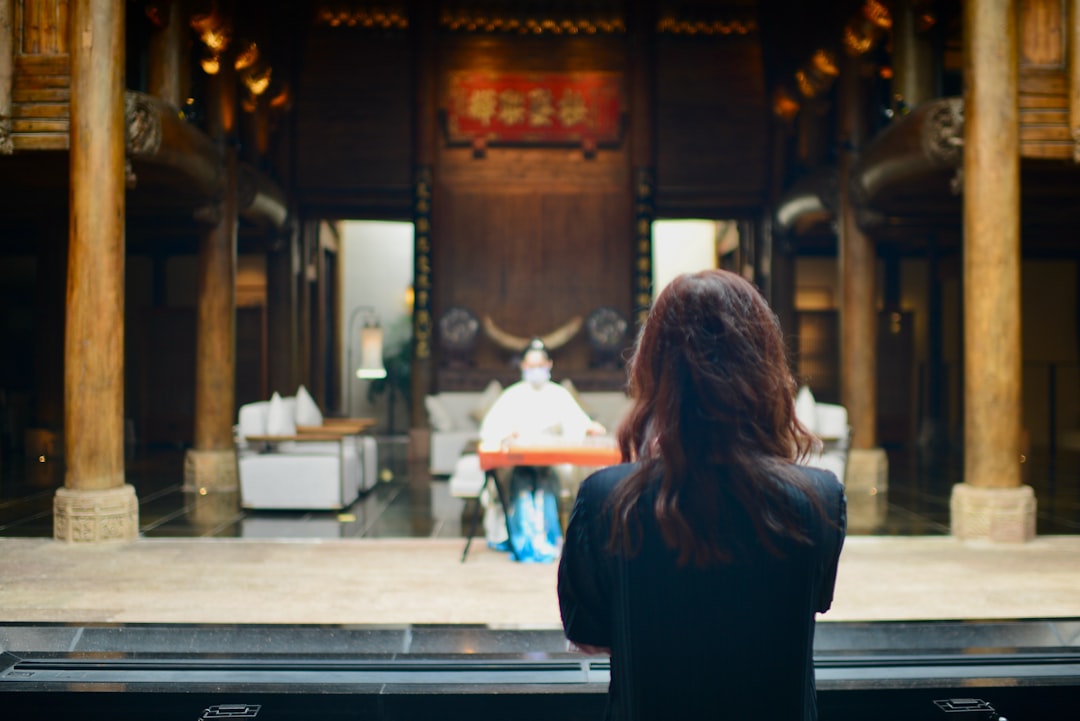
A woman in the audience watches a full Kabuki program at the Kabukiza theatre in Ginza, Tokyo

A full Kabuki program at Ginza’s Kabukiza in June offers something that most other months cannot match: a rare combination of spectacular stage ceremony, manageable crowds, and a complete matinee-and-evening structure that lets you experience the art form at its fullest.

What makes June different at the Kabukiza

At the Kabukiza Theatre, the program changes every month, and the theatre holds more than 700 Kabuki programs, most of which are traditional works developed alongside Japanese history. That variety is part of what makes each visit feel unique. June, however, has a quality that separates it from many other months.
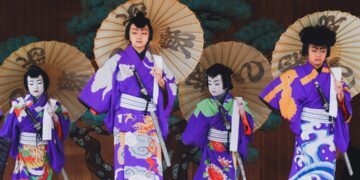
The Kabukiza has a tradition of holding grand celebrations and commemorative performances every May, and in some years those special productions continue into June as well. When that happens, June audiences receive a program built around significant artistic events. For example, Kabuki performances celebrating the name succession of Onoe Kikugorō VIII and Onoe Kikunosuke VI were presented in both May and June at the Kabukiza Theatre.

June is packed with things to see and do, and unlike spring and cherry blossom season, you do not have to deal with large crowds or long queues. June is traditionally a less popular month because of its image as the beginning of the rainy season, and this means you have the time and space to enjoy a busy schedule of activities. For the theatre, that is genuinely good news. Calmer lobbies, easier ticket access, and a more relaxed atmosphere make the whole experience much more pleasant.

What the June Kabuki program typically contains

The Kabukiza presents different morning and evening productions, each consisting of 2 to 3 acts. Those acts do not necessarily form a single story. They more commonly follow a variety format combining dance pieces, extracts from classic period dramas, more modern Kabuki works, and other elements.

In a typical June matinee, you can see an elegant dance about viewing cherry blossoms during the Genroku era (late 17th century), followed by a famous scene filled with Kabuki’s stylized beauty and an act portraying loyalty and tragedy from one of the three great classics of the Kabuki repertoire, and then a dance featuring a grand festival in Edo accompanied by Kiyomoto music. The evening show brings a very different energy. The evening program can feature a play performed in the bombastic “aragoto” acting style from the “Eighteen Favourite Kabuki Plays,” followed by an official Kojo (stage announcement) in which top-ranking actors offer congratulatory remarks.

https://noornoor.biz https://noornoor.biz https://noornoor.biz

The Kojo is not a play or dance. It is a special stage announcement related to the actors’ name succession (shumei). If you see one, consider yourself fortunate. These announcements are moments of deep ceremony, and they happen rarely.

How to buy tickets and choose your seats

The Kabukiza in Tokyo’s Ginza district was reconstructed and reopened in 2013. It closely resembles its predecessor, except for a skyscraper that now stands on top of it. It is the most accessible theatre for foreign tourists, staging plays almost every day and offering English captions on small rental screens.

Tickets for the Kabukiza Theatre go on sale about half a month before the performance. You can purchase them online, by phone, or at the box office. If a full-day ticket feels like too much for a first visit, you can choose to watch particular acts at an affordable price within a short time. This is an ideal way to enjoy Kabuki for both new audiences and experts, as well as visitors who want to save some of their time for sightseeing.

The theatre offers a simplified English audio guide for 1,000 yen for the full program and an English captioning service for 1,500 yen, which provides essential translations of dialogue and lyrics as well as explanations related to Kabuki. Rent the captioning device. It changes the experience completely.


-

A woman in the audience watches Noh performances on a torchlit open-air shrine garden stage in Tokyo at night

Noh performances in Tokyo shrine gardens

26/08/2026
A woman sits quietly in a Tokyo listening bar, experiencing kissa culture through vinyl played on a hi-fi system

Kissa culture revival: Tokyo’s best listening bars

25/07/2026
A woman in yukata watching hanabi spots light up the Tokyo riverbank on a summer night

Where to watch Tokyo’s Hanabi spots ranked by crowd level

16/07/2026
A woman writes her Tanabata Tokyo wish on a colorful tanzaku strip at a bamboo display during the Star Festival

Tanabata Tokyo: best bamboo and wish displays

07/07/2026

A visitor reads a theatre booklet before seeing a Kabuki program at the Kabukiza in Ginza

Expert perspective on experiencing the Kabuki program

Watching a Kabuki program for the first time can feel overwhelming, but that feeling passes quickly once you understand the structure. Each act is its own world, and the theatre gives you tools to follow it. The English captioning service translates the key lines and explains the cultural context, so you are never completely lost. The most important thing for first-time audiences is to arrive with patience and no fixed expectation of what “theatre” looks like. Kabuki moves at its own pace, uses its own language, and asks you to meet it on its terms. When you do that, even a single act can leave a strong impression that stays with you long after you leave Ginza.

Industry perspective, traditional arts and cultural tourism professionals in Tokyo

Practical details before you go

The Kabukiza Theatre is located in Ginza, an area known as Tokyo’s high-end shopping district, with direct and easy access to the Higashi-Ginza station. You can reach it by the Hibiya Line or Asakusa Line to Higashi-Ginza Station, with Exit 3 giving direct access to the theatre from the subway station.

Formal dress code is not required when attending a Kabuki play, although decent dress and footwear are recommended. Arrive at least 30 minutes before the performance starts. Japanese restaurants are located inside the theatre and are available for dining during intermissions. Due to the limited number of seats in each restaurant, reservation is highly recommended, no later than 2 days before the day you attend.

The traditional Kabuki shows at the Kabukiza change monthly. For June, you can expect historical plays, modern dramas, traditional dances, and classical music. Check the official Kabukiza website for the exact schedule and single-act times, as they are confirmed close to the opening day of each monthly program.
A couple stands outside the Kabukiza theatre in Ginza after attending a Kabuki program in June

Why the Kabuki program in June deserves your attention

June is genuinely one of the best times to see a full Kabuki program in Tokyo. The Kabukiza delivers a programme with real depth, the Ginza setting makes the whole day feel like an event, and the quieter tourist season means you can focus on the performance rather than the logistics. A Kabuki program in June gives you the art form at close to its best: varied, ceremonial, and deeply rooted in Japanese culture. Whether you spend a full day in the theatre or choose 1 act, the experience is worth planning for. Book early, rent the captioning device, and enjoy every moment of it.

Discover more about Kabuki program

  • Kabukiza Theatre official information and tickets (Kabuki Web)
  • Japan-Guide: How to see Kabuki in Japan
  • Ginza in June: Kabuki and traditional events guide (Magical Trip, 2026)

author avatar
Ashley Brooks
Ashley Brooks grew up in San Francisco and arrived in Tokyo as a travel blogger with a one-way ticket and a notebook. Six years later, she is the go-to voice for anyone navigating Tokyo as a newcomer, expat, or curious visitor. From hidden izakayas in Shimokitazawa to the best cherry blossom routes outside the guidebooks, her writing is practical, warm, and always honest about what it really means to live in one of the world's most fascinating cities.
See Full Bio
Previous Post

Co-working desk in Shibuya: first steps

Next Post

Food festivals lighting up Tokyo parks

Related Posts

A woman in the audience watches Noh performances on a torchlit open-air shrine garden stage in Tokyo at night
Culture

Noh performances in Tokyo shrine gardens

26/08/2026
A woman sits quietly in a Tokyo listening bar, experiencing kissa culture through vinyl played on a hi-fi system
Culture

Kissa culture revival: Tokyo’s best listening bars

25/07/2026
A woman in yukata watching hanabi spots light up the Tokyo riverbank on a summer night
Culture

Where to watch Tokyo’s Hanabi spots ranked by crowd level

16/07/2026
A woman writes her Tanabata Tokyo wish on a colorful tanzaku strip at a bamboo display during the Star Festival
Culture

Tanabata Tokyo: best bamboo and wish displays

07/07/2026
Next Post
A woman enjoys authentic cuisine at one of the international food festivals held in Tokyo's parks in June.

Food festivals lighting up Tokyo parks

Leave a Reply Cancel reply

Your email address will not be published. Required fields are marked *

No Result
View All Result

Our Focus

TOKYOwebzine is your international window on Tokyo: lifestyle, business, culture, sports and events for a global audience drawn to the city's unique blend of tradition and innovation.

Our Readers

TOKYOwebzine addresses readers who engage with Tokyo at a high level: professionally, financially, strategically, and as decision-makers in their fields.

Our Approach

Lifestyle, design, and culture are integrated as context and indicators of economic precision, creative depth, and Japan's enduring global influence, not standalone entertainment.

Recent Post

  • Mt Fuji climbing: what hikers must know
  • Gluten-free izakaya: Tokyo guide

© 2026 TOKYOwebzine by NOOR & NOOR — part of WEBZINE.world.

Welcome Back!

Login to your account below

Forgotten Password?

Retrieve your password

Please enter your username or email address to reset your password.

Log In
Manage Consent
To provide the best experiences, we use technologies like cookies to store and/or access device information. Consenting to these technologies will allow us to process data such as browsing behavior or unique IDs on this site. Not consenting or withdrawing consent, may adversely affect certain features and functions.
Functional Always active
The technical storage or access is strictly necessary for the legitimate purpose of enabling the use of a specific service explicitly requested by the subscriber or user, or for the sole purpose of carrying out the transmission of a communication over an electronic communications network.
Preferences
The technical storage or access is necessary for the legitimate purpose of storing preferences that are not requested by the subscriber or user.
Statistics
The technical storage or access that is used exclusively for statistical purposes. The technical storage or access that is used exclusively for anonymous statistical purposes. Without a subpoena, voluntary compliance on the part of your Internet Service Provider, or additional records from a third party, information stored or retrieved for this purpose alone cannot usually be used to identify you.
Marketing
The technical storage or access is required to create user profiles to send advertising, or to track the user on a website or across several websites for similar marketing purposes.
  • Manage options
  • Manage services
  • Manage {vendor_count} vendors
  • Read more about these purposes
View preferences
  • {title}
  • {title}
  • {title}
No Result
View All Result
  • Home
    • Our Authors
    • Media Kit
    • Contact
    • Cookie Policy
    • Terms and Conditions
  • News
  • Business
  • Lifestyle
    • Beauty
    • Kids
    • Sustainable living
    • Well-being
    • Sports
    • Creativity
  • Culture
  • Gastronomy
  • Travel
  • Global Tokyo
  • Insights
  • Local Guide
    • Activities in Tokyo
    • Hotels in Tokyo
    • Nightlife in Tokyo
    • Restaurants in Tokyo
    • Services in Tokyo
    • Shopping in Tokyo

© 2026 TOKYOwebzine by NOOR & NOOR — part of WEBZINE.world.

Are you sure want to unlock this post?
Unlock left : 0
Are you sure want to cancel subscription?
Verified by MonsterInsights
enEnglishja日本語