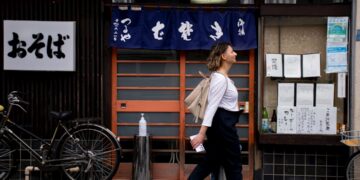
Stay cool in Tokyo without air conditioning: it begins not with a machine, but with a morning ritual, a folded fan, and the kind of patient attention to daily life that both Japanese and French sensibilities understand deeply.
The heat Tokyo locals actually face
The heat itself, often climbing above 35°C in cities like Tokyo, is only half the challenge. The real difficulty is the humidity. During peak summer, relative humidity routinely sits between 70 and 85 percent. That combination makes ordinary movement feel exhausting by mid-morning.
Tokyo’s dense urban landscape, with its towering buildings, asphalt roads, and minimal green spaces, is a textbook example of the Urban Heat Island effect. This phenomenon occurs when urban areas experience significantly higher temperatures than surrounding rural areas due to human activities and infrastructure. In Tokyo, the effect is made worse by the city’s rapid urbanization and its reliance on heat-absorbing materials like concrete and steel.
Locals often schedule demanding activities for early morning or evening and treat midday as a rest period. This rhythm is not just practical. It reflects a deeper cultural understanding: work with the day, not against it.
The art of the folding fan and the tenugui
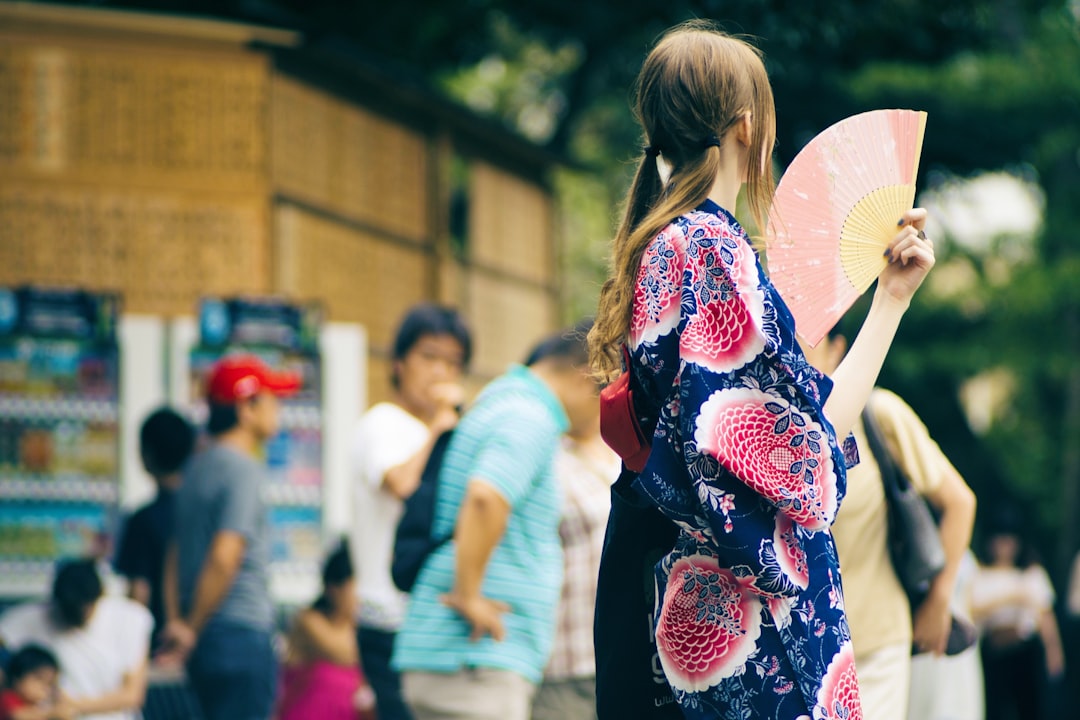
The handheld fan, known as a sensu in Japanese, gives you a steady, personal breeze. In very high temperatures it may only move warm air, but it is better than nothing. You can buy one at any 100-yen store, or visit an independent shop to support local makers. A well-chosen sensu, made from washi paper and bamboo, is also a beautiful object. It belongs equally in a Kyoto workshop and a Paris atelier.
The tenugui, a thin cotton cloth that many people keep at home, offers multiple cooling uses. One approach: fold an ice pack into the tenugui and wrap it around your neck or head for quick relief. Portable electric fans require batteries and create waste, so using the traditional folding fan is the more sustainable choice.

Together, the sensu and the tenugui form a small, portable cooling kit. Both objects are made with craft. Both reward daily use. This is the Japanese idea of *dougu*, everyday tools that are worthy of care.
Ventilation, shade, and the rhythm of the home
Open windows early in the morning to circulate fresh air, place a frozen water bottle in front of an electric fan, and keep curtains closed in sun-facing rooms. These 3 actions cost almost nothing and change the feel of a space entirely.
Traditional Japanese architecture uses sliding doors between rooms, which can be opened, closed, or removed to find the best cross-breeze. Large roofs with deep eaves also provide shade. Modern Tokyo apartments rarely offer these features, but the principle remains useful: keep curtains closed in rooms that receive full sun during the day. Many locals also grow climbing vines on the southern sides of their homes to create a natural green curtain of shade.
Fans can move air more efficiently around a room so that any cooling device works at a higher, more economical setting. Use heat-producing appliances such as stoves, rice cookers, and hairdryers in the morning or evening, not during the hottest hours of the day. Each small decision adds up across a long summer.

An industry perspective on sustainable cooling
Tokyo summers demand that we rethink comfort at the most fundamental level. The habits that reduce dependence on air conditioning are not sacrifices. They are a return to intentional living. When a person chooses a linen garment, opens a window at dawn, sprinkles water on a hot pavement, or carries a folding fan, they participate in a long tradition of human adaptation. These are not primitive solutions. They are sophisticated ones. The evidence now shows that people who actively practice these cooling rituals tolerate warmer indoor temperatures with greater satisfaction, because the act of seeking coolness is itself part of the comfort. Low-energy summer living is not about enduring heat. It is about engaging with it thoughtfully.
Industry perspective, sustainability and urban living professionals in Tokyo
Uchimizu: the Edo-period ritual that still works
Uchimizu, the practice of sprinkling water, was observed during tea ceremonies in the Azuchi-Momoyama period (1568 to 1600), though the habit of splashing water on the ground to reduce heat dates to the Edo period. You may see it today: a shopkeeper or resident flinging water outside their door. The water cools the surrounding air as it evaporates.
There are calls today for recycled water to be used for uchimizu. Because the habit is so common, it could make a real difference to water use across the summer months. A simple bucket of water at the door, thrown at dusk, is both ritual and science.
This practice has a French parallel in the old habit of wetting stone courtyards in Provence before the afternoon heat arrives. Different cultures, the same intelligent intuition.
Fabric, hydration, and the Cool Biz philosophy
The Cool Biz initiative, introduced by Japan’s Ministry of the Environment during the summer of 2005, aimed to reduce electricity use by minimizing reliance on air conditioning. It changed the standard office thermostat to 28°C and introduced a relaxed summer dress code within the government. The campaign now runs from May to October each year.
Dressing for the heat has a name in Japan: Cool Biz (ku-ru bizu). The Ministry of the Environment designed this campaign to reduce air conditioning use by encouraging lighter clothing on hot days. Locals often choose fabrics like linen or cotton and carry handheld fans. These are the same materials that French dressmakers and artisans have long praised for warmth-sensitive skin.






Staying hydrated is the foundation of surviving summer in any hot place. When sweating becomes normal, it is easy to forget how much water the body actually needs. Two drinks are strongly associated with summer in Japan: mugicha (cold barley tea) and Pocari Sweat, an electrolyte drink. Both are found in every convenience store and both are genuinely effective.
How to stay cool all summer, with intention
To stay cool in Tokyo without air conditioning is not about deprivation. It is about building a daily practice, object by object, hour by hour. Open the windows at 6 in the morning. Carry a sensu. Wear linen. Sprinkle water at the door before the sun sets. Drink cold mugicha.
Researchers studying Tokyo residents found that people who performed many of these traditional cooling activities tended to use air conditioning for shorter periods. As one researcher explains, residents appear to tolerate a less comfortable thermal environment because the active pursuit of coolness brings its own satisfaction and sense of seasonal engagement.
To stay cool in this way is to live more consciously inside the season. This is, perhaps, the most French and Japanese idea of all: that beauty and function are not opposites, and that a small ritual, done with care, is worth more than a machine you never think about.
Discover more about stay cool
- Lessons from Japan for tackling extreme heat in the home (World Economic Forum, 2025)
- How to beat Japan’s summer heat in ways better for the planet (The Japan Times)
- Tokyo: Nurturing technologies for climate adaptation (United Nations)