Trash sorting in Tokyo is one of the city’s quiet arts: a daily ritual that asks you to look closely at what you use, then return each material to its proper place.
Why each Tokyo ward has its own rules
In France, we speak of *savoir-faire*, the knowledge that lives in the hands. Tokyo’s waste system asks for something similar. It requires attention and repetition until the gesture becomes natural.

Garbage collection is handled at the municipal level, which means that the guidelines for sorting garbage vary by city and even by ward. Each of Tokyo’s 23 wards has its own set of rules for how you should sort and dispose of household trash and the frequency with which each type of garbage is collected. This is not bureaucratic complexity for its own purpose. It reflects a philosophy: that place matters, that a neighborhood’s needs are specific, and that care begins at the smallest scale.
Japan is known for its clean streets and high recycling standards, but one important detail often surprises newcomers: trash separation rules differ by ward. What you can throw out as burnable in one part of Tokyo may be non-burnable in another. So the first step, before you sort a single bag, is to find your ward’s official guide.
The 5 main categories of trash sorting
Most wards use the following categories: burnable (kanen gomi), non-burnable (funen gomi), recyclables (shigen gomi), large-sized waste (sodai gomi), and hazardous waste (yuugai gomi). Think of these 5 categories as the structure of a good craft: once you know the components, the work becomes logical and even satisfying.
Instead of a simple split between recyclables and general waste, Tokyo requires granular sorting. Waste is typically divided into combustibles, non-combustibles, and various recyclables like PET bottles, glass, and paper, each collected only on specific designated days. Burnable waste includes food scraps, used tissues, and clothing. Non-burnable covers ceramics, glass, and certain plastics.

Some wards also separate used clothing, cooking oil, or small electronics as special categories. These additions vary widely, so treat your ward’s guide as the true authority and all general advice, including this article, as a starting point only.
How ward-by-ward differences affect daily life
The differences between wards are real and specific. Shibuya and Setagaya wards allow you to combine plastic products with regular burnable trash. By contrast, Minato, Meguro, and Shinjuku wards require you to separate plastics with the Pla-mark into a distinct category. A container that belongs in one bag in Setagaya belongs in a different bag in Minato.
For example, Setagaya Ward treats wooden chopsticks as burnable, while Shinjuku may classify them differently. These small distinctions matter. They matter to your neighbors, to your building manager, and to the collection workers who read the contents of your transparent bags.
Improperly sorted trash may be left behind with a warning sticker. Repeated violations can lead to complaints from neighbors, intervention by building managers, or, in rare cases, fines. The social contract here is quiet but firm, and respecting it is one of the most sincere ways to participate in community life.





An expert perspective on trash sorting
In Tokyo’s waste system, the act of sorting is not simply a technical task. It is a direct expression of civic awareness. When a resident rinses a PET bottle, removes its label, and separates the cap, they complete a small chain of responsibility that connects their kitchen to a materials recovery facility. This precision is what makes Tokyo’s system function. The challenge today is that Tokyo’s recycling rate stands at 25.6%, still short of the 37% target set for 2030. Greater participation at the household level, particularly around plastic separation, is the most direct lever available. Every ward office publishes guides in multiple languages. The resources exist. The question is simply whether residents choose to use them.
Industry perspective, sustainability and waste management professionals in Tokyo
Bags, timing, and the pickup schedule
The physical rules of trash sorting are clear and consistent across most wards. You do not need to buy special city bags in Tokyo’s 23 wards. Any transparent or semi-transparent garbage bag is acceptable. Opaque or black bags may be left uncollected. This transparency requirement is intentional: it allows collection workers to verify sorting quickly and without opening each bag.
Burnable garbage is typically collected twice a week, while non-burnable waste is collected about twice a month. Always check your ward’s collection schedule for the exact days. Garbage must be out by 8:00 a.m. on the correct collection day. Do not put your garbage out the night before or on the wrong day.
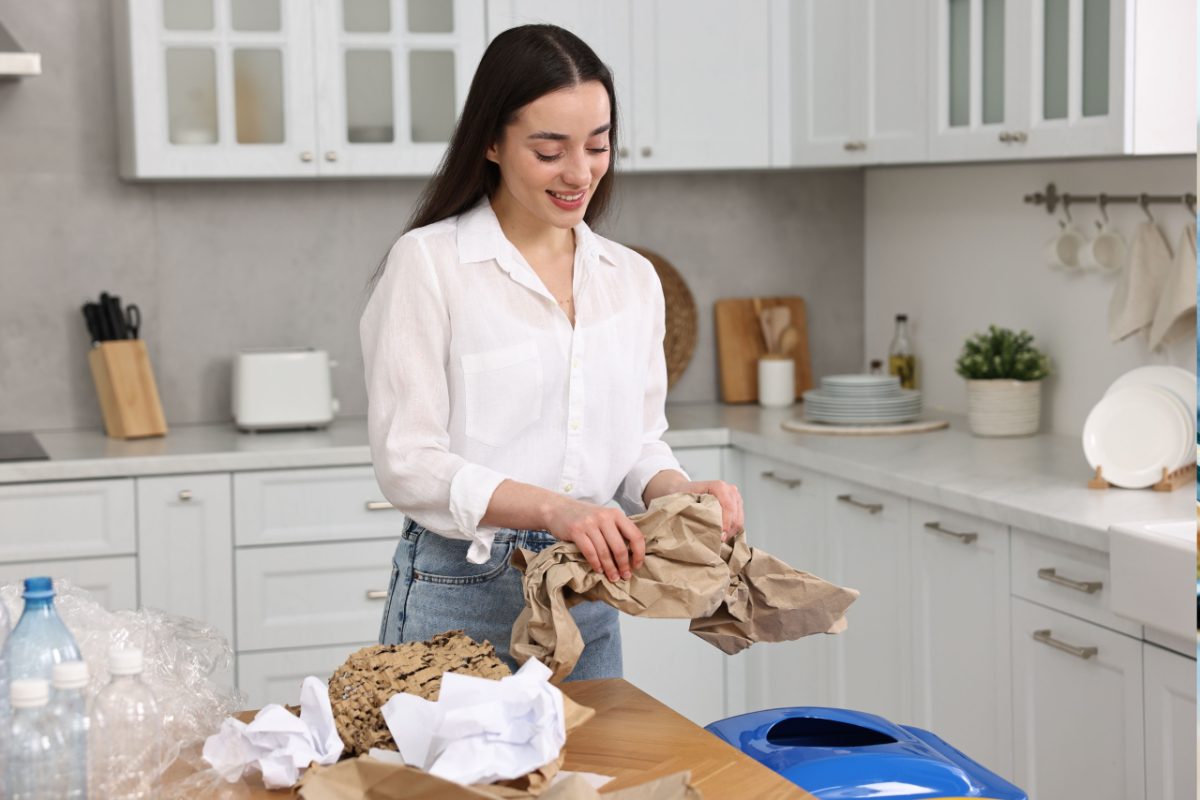
For PET bottles, the preparation is precise. PET bottles must be emptied, rinsed, and have labels removed and caps taken off. The bottles go in one category, and caps and labels usually go in the plastic containers category. This small act of preparation, bottle rinsed, label peeled, cap sorted separately, is the kind of quiet attention Tokyo rewards.

Finding your ward’s guide and useful apps
Visit or call your ward’s waste management department for pamphlets and guidance. Official ward websites offer downloadable PDF guides for sorting and disposal. Most of these guides are available in English, and many include illustrations that make the categories immediately clear.
Many wards offer official apps such as Gomi Navi or Minato Waste Guide that let you check sorting rules, get reminders, and search for specific items. Some also support English, Chinese, or Korean. These tools remove most of the remaining uncertainty. You enter an item, and the app tells you exactly where it belongs.

When you first register your address at a local ward office, you will receive information on when trash and recycling is collected. That welcome document is valuable. Keep it visible in your kitchen, near the place where you sort.
Make trash sorting in Tokyo a daily practice
Trash sorting in Tokyo is not a burden. It is an invitation to slow down, to notice materials, and to act with precision. Like the French tradition of choosing each ingredient with care, good trash sorting asks you to see what you hold before you let it go.
Begin with your ward’s official guide, set up 3 separate bins at home for burnable, recyclables, and non-burnable waste, and observe your neighbors on collection day. Trash sorting will become part of your morning rhythm within a few weeks. The beauty of this city is partly built on this small, collective discipline. Participate in it, and Tokyo will feel more like home.
Discover more about trash sorting
- Tokyo Metropolitan Government: English Waste Disposal Pamphlet
- G-NETS Insight: Tokyo Waste Management Policies and Landfill Strategy
- Asia Pathways: Japan’s Zero-Waste Journey (July 2025)
[End of deliverables]