CONTACT
  • Login
Upgrade
TOKYOwebzine
Advertisement
  • Home
    • Our Authors
    • Media Kit
    • Contact
    • Cookie Policy
    • Terms and Conditions
  • News
  • Business
  • Lifestyle
    • Beauty
    • Kids
    • Sustainable living
    • Well-being
    • Sports
    • Creativity
  • Culture
  • Gastronomy
  • Travel
  • Global Tokyo
  • Insights
  • Local Guide
    • Activities in Tokyo
    • Hotels in Tokyo
    • Nightlife in Tokyo
    • Restaurants in Tokyo
    • Services in Tokyo
    • Shopping in Tokyo
  • Home
    • Our Authors
    • Media Kit
    • Contact
    • Cookie Policy
    • Terms and Conditions
  • News
  • Business
  • Lifestyle
    • Beauty
    • Kids
    • Sustainable living
    • Well-being
    • Sports
    • Creativity
  • Culture
  • Gastronomy
  • Travel
  • Global Tokyo
  • Insights
  • Local Guide
    • Activities in Tokyo
    • Hotels in Tokyo
    • Nightlife in Tokyo
    • Restaurants in Tokyo
    • Services in Tokyo
    • Shopping in Tokyo
No Result
View All Result
TOKYOwebzine
No Result
View All Result
Home Travel

Departure tax Japan: ¥3,000 from 1 July

Japan's departure tax triples on 1 July, here is exactly what Tokyo travellers need to know before they book or fly.

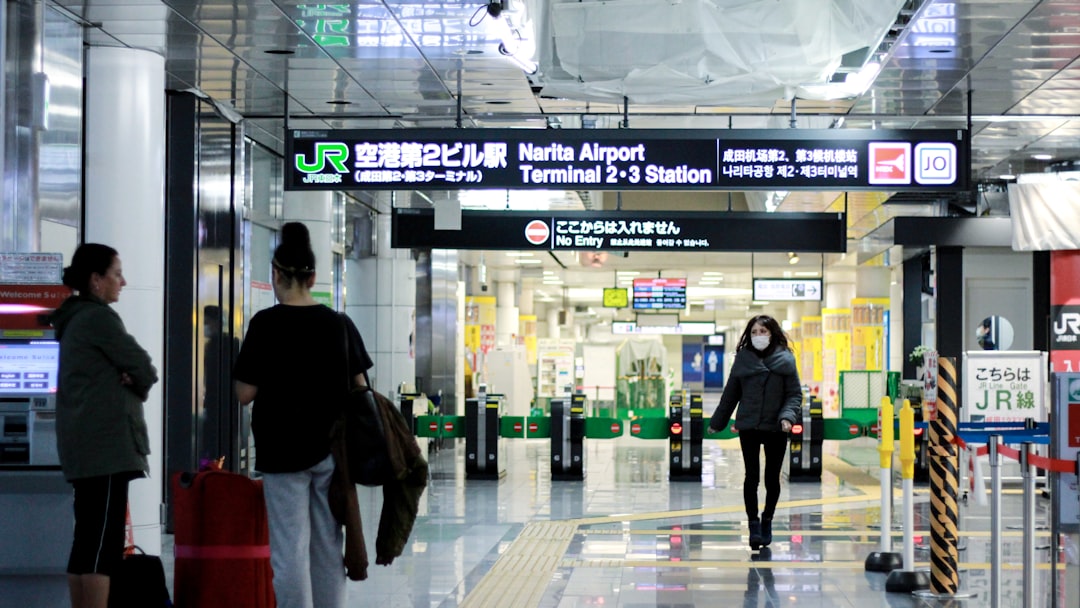
A traveller reviews their boarding pass at a Tokyo airport departure gate, aware of the departure tax added to their ticket.

Japan’s departure tax is tripling tomorrow, and if you call Tokyo home, even temporarily, this one is worth understanding properly before you head to the airport.

What the new departure tax actually is

The Japan departure tax, officially called the International Tourist Tax, is a government departure fee included in most airfare when leaving Japan. It is not new. Japan introduced its tourist tax on 7 January 2019, charging ¥1,000 per departure. For years, most travellers paid it without ever noticing, because it was quietly bundled into the ticket price.

The Japanese government will raise the tax from the current ¥1,000 to ¥3,000 from 1 July. The tax applies regardless of nationality, covering both Japanese citizens and foreign visitors. The tax is the same regardless of cabin class (business or economy) and will be added directly to airline or ship ticket prices.

The tax may appear as “International Tourist Tax,” “Japan Departure Tax,” or a similar label, depending on the airline’s ticketing system. Because the tax is built into the ticket price, there is no risk of being stopped at the airport for failing to pay. You will not need to carry extra cash for this purpose. The entire process is handled before you board.

Who pays and who does not

Almost all international travellers departing Japan are required to pay the tourist tax. This includes leisure travellers, returning residents, and business travellers. If you live in Tokyo and you are flying anywhere, this applies to you.

Infants and toddlers under 2, and travellers transiting through Japan for 24 hours or less, are exempt. That second point matters. Transit passengers who remain in Japan for 24 hours or less without clearing immigration are exempt. If you leave the airport to visit Tokyo during a layover, you pay on departure.

https://noornoor.biz https://noornoor.biz https://noornoor.biz

To minimise market disruption, the existing rate will continue to apply to passengers departing on tickets issued by 30 June. So if you already have a ticket booked and issued before that date, check your fare breakdown. You may still see the old ¥1,000 rate on that booking.

Why Japan is raising the tax now

The primary reason is to generate additional revenue to address the growing challenges of overtourism across the country. Japan welcomed over 32 million international visitors in 2025, a figure that has strained popular destinations such as Kyoto’s temples, Himeji Castle, and major urban transit systems.

The government anticipates that the increase in the departure tax will raise tourism revenue by nearly 2.7 times, reaching an estimated 130 billion yen by the end of the fiscal year. As someone living in Tokyo, you already know what overcrowded stations and packed tourist spots look like. This tax is, in part, the government’s financial response to that pressure.

Revenue will help reduce crowding at attractions, enhance multilingual guidance, and protect local cultural heritage. Improvements to immigration technology, including faster passport gates and streamlined entry procedures, are also part of the investment plan. Whether those goals are met is a fair question, but the intentions are stated clearly.

A family with luggage  at anairport terminal in Japan, where the departure tax applies to every passenger aged two and over.

Expert perspective on the tax increase

Japan’s departure tax rise is best understood as part of a wider shift in how the country manages mass international tourism. The ¥2,000 increase per person is modest in isolation, but it represents a policy direction that is unlikely to reverse. Governments that introduce departure levies rarely reduce them over time. For residents and frequent travellers based in Tokyo, the cumulative effect across multiple trips per year is worth factoring into annual travel budgets. The revenue commitments, including multilingual signage, crowd management systems, and heritage preservation, are areas where Tokyo and Kyoto have documented, measurable backlogs. Funding those improvements through departure fees is a model used successfully in Australia, New Zealand, the United Kingdom, and South Korea. The more relevant question for regular travellers is not whether the increase is justified, but whether the funds are spent with transparency and accountability.

Industry perspective, sustainable tourism and travel policy professionals in Japan

What this means for your passport and your wallet

To ease the impact on Japanese residents from the higher exit tax, the government has ordered a near-halving of the 10-year passport fee, from about ¥16,000 to about ¥9,000. If you hold Japanese residency or citizenship and you renew your passport soon, that saving partially offsets the higher departure cost over several trips.


-

A guest in a yukata robe sits before a Tokyo ryokan kaiseki dinner table set with seasonal dishes and paper lanterns.

Tokyo ryokan picks for Obon season

14/08/2026
A woman walks along one of Tokyo's urban beaches at Odaiba Seaside Park with Rainbow Bridge visible across the water

Best urban beaches Tokyo: your bayside guide

18/07/2026
A woman walks through the blue nemophila day trip destination at Miharashi Hill in Hitachi Seaside Park, Ibaraki, Japan

Nemophila day trip from Tokyo guide

29/06/2026
A woman photographs vibrant blue Tokyo hydrangeas along the stone steps of a traditional shrine in June.

Tokyo hydrangeas: your June rainy season guide

19/06/2026
A woman stands quietly beside the River during a Fussa firefly viewing evening, watching soft lights reflect on the water

Fussa firefly viewing guide for June

11/06/2026

For a family of 4, the new tax adds ¥8,000 to the cost of every international trip. That is not a budget-breaking amount for most Tokyo residents, but it is worth knowing before you book. Industry observers say the tax increase alone is unlikely to sharply reduce travel demand, but combined with rising airfares and accommodation costs, the perceived cost burden will grow.

The policy reflects a broader trend among governments worldwide. Countries including Australia, South Korea, New Zealand, and the United Kingdom already collect similar departure levies, and the revenue model is well established in the travel industry. Japan is not an outlier here. It is catching up.
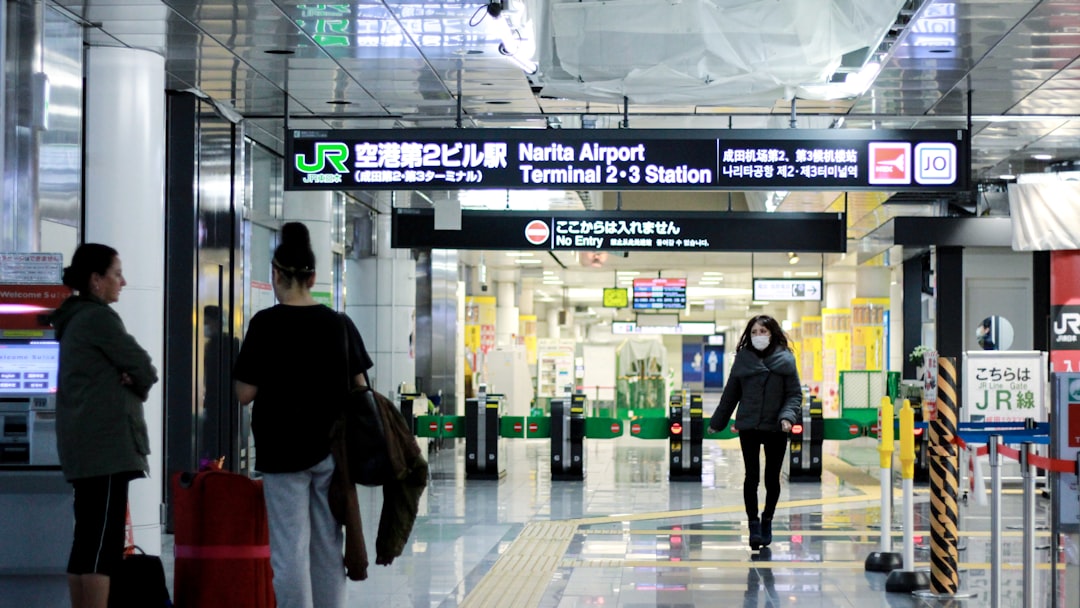
A woman presents her passport at a Japanese airport immigration counter before paying the departure tax

Conclusion

The departure tax increase to ¥3,000 is a real cost, and residents flying out of Tokyo regularly will feel it across the year. However, the departure tax is built into your ticket, requires no action at the airport, and is consistent with how dozens of other countries already manage outbound travel fees. Check your ticket issue date, budget for ¥3,000 per person on every future booking, and note the passport fee reduction if it applies to you. Japan is managing a genuine overtourism challenge, and this departure tax is one of the tools it is using to fund that work. Plan for it, and travel without surprises.

Discover more about departure tax

  • International Tourist Tax, Japan Tourism (JNTO)
  • Japan Tourism Statistics, JNTO Data
  • Travelling to Japan in 2026: New taxes and price hikes explained, Euronews

author avatar
Ashley Brooks
Ashley Brooks grew up in San Francisco and arrived in Tokyo as a travel blogger with a one-way ticket and a notebook. Six years later, she is the go-to voice for anyone navigating Tokyo as a newcomer, expat, or curious visitor. From hidden izakayas in Shimokitazawa to the best cherry blossom routes outside the guidebooks, her writing is practical, warm, and always honest about what it really means to live in one of the world's most fascinating cities.
See Full Bio
Previous Post

Rental yields in Tokyo’s top neighborhoods

Next Post

Hanabi Tokyo JPOP BEST: tickets and tips

Related Posts

A guest in a yukata robe sits before a Tokyo ryokan kaiseki dinner table set with seasonal dishes and paper lanterns.
Travel

Tokyo ryokan picks for Obon season

14/08/2026
A woman walks along one of Tokyo's urban beaches at Odaiba Seaside Park with Rainbow Bridge visible across the water
Travel

Best urban beaches Tokyo: your bayside guide

18/07/2026
A woman walks through the blue nemophila day trip destination at Miharashi Hill in Hitachi Seaside Park, Ibaraki, Japan
Travel

Nemophila day trip from Tokyo guide

29/06/2026
A woman photographs vibrant blue Tokyo hydrangeas along the stone steps of a traditional shrine in June.
Travel

Tokyo hydrangeas: your June rainy season guide

19/06/2026
A woman stands quietly beside the River during a Fussa firefly viewing evening, watching soft lights reflect on the water
Travel

Fussa firefly viewing guide for June

11/06/2026
Next Post
A woman in a yukata smiles while watching the Hanabi Tokyo fireworks show at night, surrounded by a crowd of festival-goers.

Hanabi Tokyo JPOP BEST: tickets and tips

Leave a Reply Cancel reply

Your email address will not be published. Required fields are marked *

No Result
View All Result

Our Focus

TOKYOwebzine is your international window on Tokyo: lifestyle, business, culture, sports and events for a global audience drawn to the city's unique blend of tradition and innovation.

Our Readers

TOKYOwebzine addresses readers who engage with Tokyo at a high level: professionally, financially, strategically, and as decision-makers in their fields.

Our Approach

Lifestyle, design, and culture are integrated as context and indicators of economic precision, creative depth, and Japan's enduring global influence, not standalone entertainment.

Recent Post

  • Mt Fuji climbing: what hikers must know
  • Gluten-free izakaya: Tokyo guide

© 2026 TOKYOwebzine by NOOR & NOOR — part of WEBZINE.world.

Welcome Back!

Login to your account below

Forgotten Password?

Retrieve your password

Please enter your username or email address to reset your password.

Log In
Manage Consent
To provide the best experiences, we use technologies like cookies to store and/or access device information. Consenting to these technologies will allow us to process data such as browsing behavior or unique IDs on this site. Not consenting or withdrawing consent, may adversely affect certain features and functions.
Functional Always active
The technical storage or access is strictly necessary for the legitimate purpose of enabling the use of a specific service explicitly requested by the subscriber or user, or for the sole purpose of carrying out the transmission of a communication over an electronic communications network.
Preferences
The technical storage or access is necessary for the legitimate purpose of storing preferences that are not requested by the subscriber or user.
Statistics
The technical storage or access that is used exclusively for statistical purposes. The technical storage or access that is used exclusively for anonymous statistical purposes. Without a subpoena, voluntary compliance on the part of your Internet Service Provider, or additional records from a third party, information stored or retrieved for this purpose alone cannot usually be used to identify you.
Marketing
The technical storage or access is required to create user profiles to send advertising, or to track the user on a website or across several websites for similar marketing purposes.
  • Manage options
  • Manage services
  • Manage {vendor_count} vendors
  • Read more about these purposes
View preferences
  • {title}
  • {title}
  • {title}
No Result
View All Result
  • Home
    • Our Authors
    • Media Kit
    • Contact
    • Cookie Policy
    • Terms and Conditions
  • News
  • Business
  • Lifestyle
    • Beauty
    • Kids
    • Sustainable living
    • Well-being
    • Sports
    • Creativity
  • Culture
  • Gastronomy
  • Travel
  • Global Tokyo
  • Insights
  • Local Guide
    • Activities in Tokyo
    • Hotels in Tokyo
    • Nightlife in Tokyo
    • Restaurants in Tokyo
    • Services in Tokyo
    • Shopping in Tokyo

© 2026 TOKYOwebzine by NOOR & NOOR — part of WEBZINE.world.

Are you sure want to unlock this post?
Unlock left : 0
Are you sure want to cancel subscription?
Verified by MonsterInsights
enEnglishja日本語