CONTACT
  • Login
Upgrade
TOKYOwebzine
Advertisement
  • Home
    • Our Authors
    • Media Kit
    • Contact
    • Cookie Policy
    • Terms and Conditions
  • News
  • Business
  • Lifestyle
    • Beauty
    • Kids
    • Sustainable living
    • Well-being
    • Sports
    • Creativity
  • Culture
  • Gastronomy
  • Travel
  • Global Tokyo
  • Insights
  • Local Guide
    • Activities in Tokyo
    • Hotels in Tokyo
    • Nightlife in Tokyo
    • Restaurants in Tokyo
    • Services in Tokyo
    • Shopping in Tokyo
  • Home
    • Our Authors
    • Media Kit
    • Contact
    • Cookie Policy
    • Terms and Conditions
  • News
  • Business
  • Lifestyle
    • Beauty
    • Kids
    • Sustainable living
    • Well-being
    • Sports
    • Creativity
  • Culture
  • Gastronomy
  • Travel
  • Global Tokyo
  • Insights
  • Local Guide
    • Activities in Tokyo
    • Hotels in Tokyo
    • Nightlife in Tokyo
    • Restaurants in Tokyo
    • Services in Tokyo
    • Shopping in Tokyo
No Result
View All Result
TOKYOwebzine
No Result
View All Result
Home Luxury Lifestyle Creativity

Tokyo workshop: pottery and indigo dye

Everything a complete beginner needs to know before booking a pottery or indigo-dye class in Tokyo.

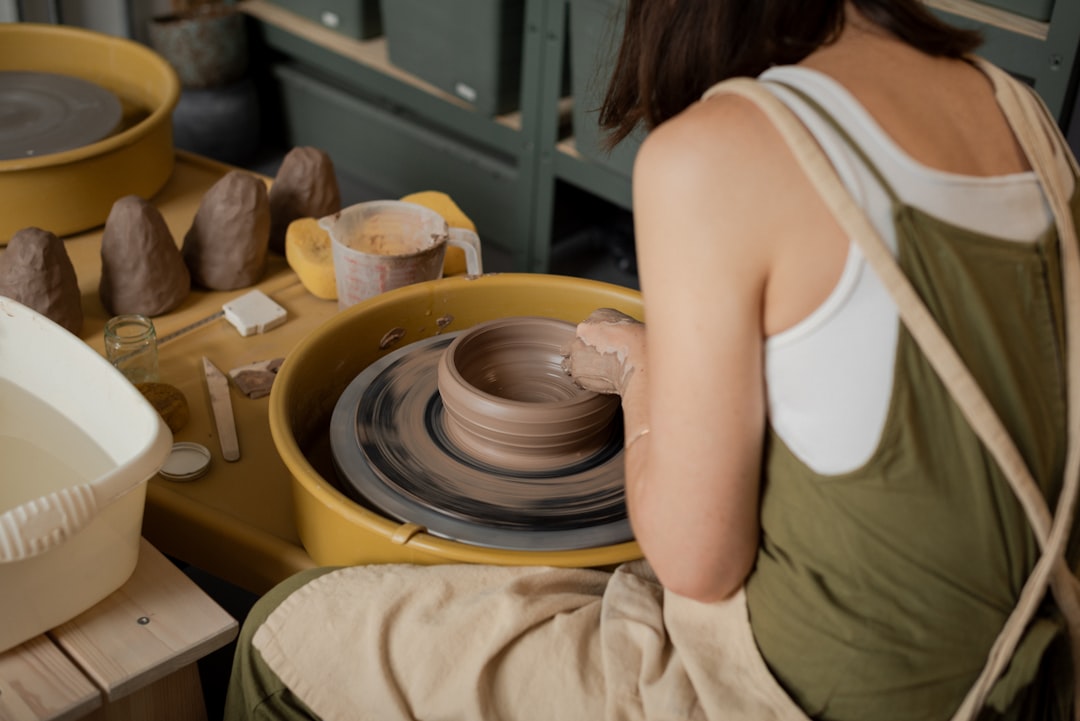
A woman shaping clay at a Tokyo workshop pottery wheel, focused and covered in clay dust

A Tokyo workshop for pottery or indigo dye is one of the most satisfying ways to spend a slow Saturday in this city, and you do not need any experience to enjoy it.

Why these 2 crafts are perfect for beginners

Tokyo offers a large number of traditional craft experiences. Pottery and indigo dyeing are 2 of the most popular options, and for good reason. Both are physical, meditative, and produce a finished object you can take home. Neither requires talent, only a willingness to follow simple steps.

Tokyo offers a wonderful selection of pottery experiences where travelers and residents can try traditional Japanese ceramics. Pottery classes in the city are beginner-friendly and often include English guidance. That combination matters a great deal when you are new to both the craft and the language.

At indigo-dye studios such as Wanariya in Taito, you can experience the craft of dyeing products in ai, real indigo, using the squeeze dyeing process. The appeal of this process is its unpredictability: you will not know what your design will look like until it is completed. That is exactly the kind of low-pressure creativity that suits a beginner well.

How to find the right Tokyo workshop

The first step is deciding between pottery and indigo dyeing. Pottery takes more time. Classes are usually short and beginner-friendly, lasting about 1 hour, which fits well into a busy schedule. However, you will not take your piece home the same day. After shaping, the instructor handles trimming, firing, and coloring, and it takes approximately 2 months for the final piece to be completed. Studios will ship or hold the piece for you.

Indigo dyeing moves faster. A beginner-friendly session of 90 minutes typically involves dyeing a plain handkerchief, bandana, or tote bag. You walk out with a finished, wearable item the same day. Your product can be brought back during that day. If you want instant results, indigo is the better choice for your first visit.

https://noornoor.biz https://noornoor.biz https://noornoor.biz

For English speakers, the options are growing. There are Japanese pottery classes available in English in Tokyo, and trial classes are suitable for beginners. Studios such as Aikuma Japanese Dyes offer workshops in English, held at a studio located in Asakusa, in the heart of Tokyo.

What happens inside a pottery studio

Walking into a pottery studio for the first time can feel a little intimidating. It does not need to. If you are a total beginner, instructors will sit with you for 1 or 2 hours of lessons on your first visit. After that, people typically find their footing and want to work more independently, with occasional advice.

Students who want to improve wheel-throwing techniques can focus on the potter’s wheel, while those who prefer more free-form expression can work mainly with hand building. Beginner courses introduce basic hand-building methods, including coil, pinch, and slab techniques. Most studios also cover glazing at a later stage.

You will likely make a few wobbly small bowls, plates, or cups on your first couple of visits, but as you get better control you will begin to create your favorite forms. That is an honest and encouraging description of the learning curve. Keep it in mind and enjoy the process.

A person lifting indigo-dyed fabric from a vat at a Tokyo workshop, watching the blue color develop

Expert perspective on craft workshops in Tokyo

Tokyo’s craft studio scene has changed significantly over the past decade. More studios now provide English support as a standard feature rather than an add-on, because they recognize that international residents want a genuine cultural experience, not just a tourist activity. For pottery specifically, beginners often underestimate how quickly they can produce something functional and beautiful. Hand building is accessible within minutes. The wheel takes longer to master, but even a lopsided bowl made in your first session carries a certain honesty and charm. For indigo dyeing, the most common surprise is the color: it starts green in the vat and oxidizes to blue in front of your eyes when you lift the fabric into the air. That moment never gets old, no matter how many times an instructor watches it happen. If you are unsure which craft to try first, consider doing both: a short indigo session to take something home on the day, followed by a pottery trial course the following weekend.

Industry perspective, traditional craft and cultural workshop professionals in Tokyo

-

A client and a custom illustrator in Tokyo review a printed portfolio together at a studio desk

Custom illustrator Tokyo: a clear guide

13/08/2026
A volunteer helps a woman mend a jacket at a repair café in Tokyo, showing community mending in action.

Repair cafés Tokyo: fix, don’t replace

08/08/2026
illustration prints displayed on a table at one of the popular art markets in Tokyo on a sunny weekend morning.

Art markets in Tokyo worth visiting now

06/08/2026
A woman works with molten glass during workshop

Tokyo kilns open for summer sessions

27/07/2026
A crowded neon-lit street in Japan at night, with colorful signs and storefronts lining the sidewalk as shoppers pass by.

Art supplies Tokyo: 5 best districts

15/07/2026

What to bring and what to expect on the day

Preparation for a beginner session is simple. Payment is typically made on the day of the workshop by cash, credit card, or PayPay, and you need to bring nothing. Just come as you are.

For pottery, there is 1 practical note. Trim your nails short before the session, as long nails make pottery work difficult. Wear clothes you do not mind getting clay on, or ask the studio for an apron. Most provide one.

For indigo dyeing, studios such as Wanariya provide aprons, gloves, and shoe covers so you do not get dirty. You simply need to bring yourself. If you want to dye your own item, you can also bring a piece of fabric such as a shirt, cloth, or hand towel.

A studio instructor helping a beginner student at a Tokyo workshop pottery class

Booking your first session

Booking is straightforward for most studios. Reservation sites such as Activity Japan allow online booking 24 hours a day, and online payment by credit card is accepted. The GO TOKYO official tourism website also lists verified studios with maps and transit directions.

Choose a studio close to a station you already know. Ray Ceramic Studio, for example, is located just a 9-minute walk from JR Shibuya Station in Tokyo. Aikuma’s English dyeing workshops are held at a studio in Asakusa, one of Tokyo’s most accessible and interesting neighborhoods.

Check the studio’s cancellation policy before you book. Group sessions fill up on weekends, especially in autumn. Book at least 1 week in advance for a Saturday or Sunday class.

Start with one session and see how it feels

A Tokyo workshop for pottery or indigo dyeing does not require a big commitment. One session is enough to know whether you want to continue. Most pottery studios let you choose between a trial lesson, a short course, or a longer course. You are never locked into anything.

The point of a Tokyo workshop like this is not to become an expert. It is to spend 2 hours doing something slow, physical, and entirely disconnected from a screen. You will leave with clay under your fingernails, a piece of fabric dyed a color you did not plan, and a quiet sense of satisfaction that is genuinely hard to find anywhere else in this city. Book one session. See what happens.

Discover more about Tokyo workshop

  • GO TOKYO: Ceramic Art Workshop
  • Japan National Tourism Organization: Traditional Craft Experiences and Workshops
  • Time Out Tokyo: Best craft workshops and classes in Tokyo

author avatar
Ashley Brooks
Ashley Brooks grew up in San Francisco and arrived in Tokyo as a travel blogger with a one-way ticket and a notebook. Six years later, she is the go-to voice for anyone navigating Tokyo as a newcomer, expat, or curious visitor. From hidden izakayas in Shimokitazawa to the best cherry blossom routes outside the guidebooks, her writing is practical, warm, and always honest about what it really means to live in one of the world's most fascinating cities.
See Full Bio
Previous Post

Tokyo hydrangeas: your June rainy season guide

Next Post

Tokyo onsen and sento after dark

Related Posts

A client and a custom illustrator in Tokyo review a printed portfolio together at a studio desk
Creativity

Custom illustrator Tokyo: a clear guide

13/08/2026
A volunteer helps a woman mend a jacket at a repair café in Tokyo, showing community mending in action.
Creativity

Repair cafés Tokyo: fix, don’t replace

08/08/2026
illustration prints displayed on a table at one of the popular art markets in Tokyo on a sunny weekend morning.
Creativity

Art markets in Tokyo worth visiting now

06/08/2026
A woman works with molten glass during workshop
Creativity

Tokyo kilns open for summer sessions

27/07/2026
A crowded neon-lit street in Japan at night, with colorful signs and storefronts lining the sidewalk as shoppers pass by.
Creativity

Art supplies Tokyo: 5 best districts

15/07/2026
Next Post
A woman rests beside a steaming indoor Tokyo onsen pool, eyes closed, surrounded by tiled walls and warm mineral water.

Tokyo onsen and sento after dark

Leave a Reply Cancel reply

Your email address will not be published. Required fields are marked *

No Result
View All Result

Our Focus

TOKYOwebzine is your international window on Tokyo: lifestyle, business, culture, sports and events for a global audience drawn to the city's unique blend of tradition and innovation.

Our Readers

TOKYOwebzine addresses readers who engage with Tokyo at a high level: professionally, financially, strategically, and as decision-makers in their fields.

Our Approach

Lifestyle, design, and culture are integrated as context and indicators of economic precision, creative depth, and Japan's enduring global influence, not standalone entertainment.

Recent Post

  • Mt Fuji climbing: what hikers must know
  • Gluten-free izakaya: Tokyo guide

© 2026 TOKYOwebzine by NOOR & NOOR — part of WEBZINE.world.

Welcome Back!

Login to your account below

Forgotten Password?

Retrieve your password

Please enter your username or email address to reset your password.

Log In
Manage Consent
To provide the best experiences, we use technologies like cookies to store and/or access device information. Consenting to these technologies will allow us to process data such as browsing behavior or unique IDs on this site. Not consenting or withdrawing consent, may adversely affect certain features and functions.
Functional Always active
The technical storage or access is strictly necessary for the legitimate purpose of enabling the use of a specific service explicitly requested by the subscriber or user, or for the sole purpose of carrying out the transmission of a communication over an electronic communications network.
Preferences
The technical storage or access is necessary for the legitimate purpose of storing preferences that are not requested by the subscriber or user.
Statistics
The technical storage or access that is used exclusively for statistical purposes. The technical storage or access that is used exclusively for anonymous statistical purposes. Without a subpoena, voluntary compliance on the part of your Internet Service Provider, or additional records from a third party, information stored or retrieved for this purpose alone cannot usually be used to identify you.
Marketing
The technical storage or access is required to create user profiles to send advertising, or to track the user on a website or across several websites for similar marketing purposes.
  • Manage options
  • Manage services
  • Manage {vendor_count} vendors
  • Read more about these purposes
View preferences
  • {title}
  • {title}
  • {title}
No Result
View All Result
  • Home
    • Our Authors
    • Media Kit
    • Contact
    • Cookie Policy
    • Terms and Conditions
  • News
  • Business
  • Lifestyle
    • Beauty
    • Kids
    • Sustainable living
    • Well-being
    • Sports
    • Creativity
  • Culture
  • Gastronomy
  • Travel
  • Global Tokyo
  • Insights
  • Local Guide
    • Activities in Tokyo
    • Hotels in Tokyo
    • Nightlife in Tokyo
    • Restaurants in Tokyo
    • Services in Tokyo
    • Shopping in Tokyo

© 2026 TOKYOwebzine by NOOR & NOOR — part of WEBZINE.world.

Are you sure want to unlock this post?
Unlock left : 0
Are you sure want to cancel subscription?
Verified by MonsterInsights
enEnglishja日本語